
Chickens are intelligent and social animals who can form friendships, communicate in complex ways, care for their young and experience a wide range of emotions.1,2
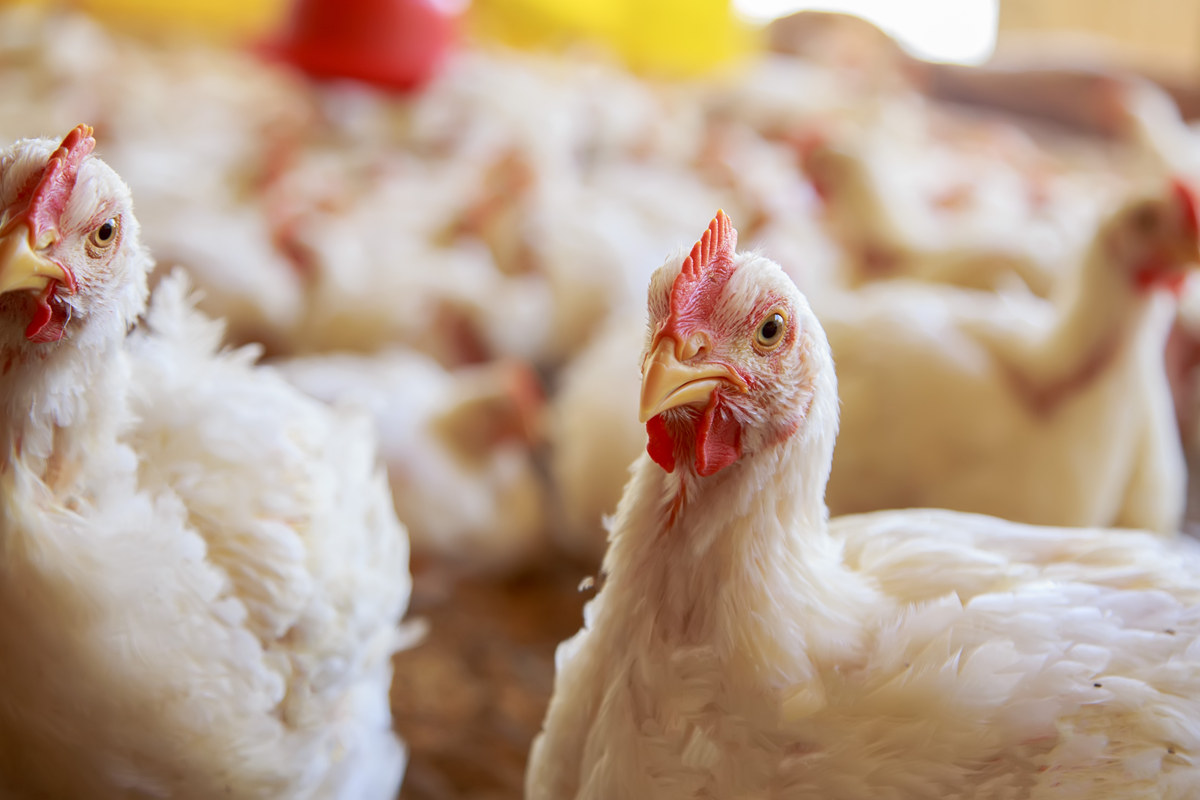
Yet despite all this, they are one of the most abused land animals on Earth and slaughtered in the highest numbers.3 In the UK alone, around 1 billion chickens are slaughtered for meat every year.4
Most of these remarkable birds spend their short lives in factory farming systems where their natural behaviours are denied from the moment they hatch.
In this article, we’ll explore key facts about their abilities, emotions and social behaviour. Understanding who chickens are invites us to see them as individuals, each deserving compassion and the freedom to express their innate instincts.
1. Chickens have complex social lives
You may have heard the term ‘pecking order’, but did you know that chickens are highly social animals? They recognise dozens of individual faces within their flock and establish hierarchies, friendships and bonds.5
Chickens communicate using a sophisticated range of vocalisations and body language. Researchers have identified more than 20 distinct vocal calls used to warn others of danger, call chicks to food or communicate different emotional states.6
Mother hens begin communicating with their chicks before they even hatch. While still inside the egg, chicks chirp back to their mothers and siblings, beginning social bonding before entering the world.7
Chickens also show signs of empathy. Studies have found that hens become distressed when watching their chicks experience discomfort, displaying increased heart rates and signs of anxiety, suggesting they are emotionally affected by the suffering of others.8
2. Chickens are smarter than we realise
Are chickens smart? You bet they are! Scientists have found that they can solve problems, anticipate future events and even demonstrate self-control, all of which are abilities associated with higher intelligence.
They can remember routes, recognise human faces and learn from observing others.9 Chickens have also shown evidence of numerical understanding, with young chicks able to distinguish between different quantities at a very early age.10
Sadly, most farmed chickens never get this level of enrichment. On factory farms, tens of thousands are confined together in crowded sheds, unable to explore or engage with their environment.
Even free-range systems often fall short, with birds still facing overcrowding, limited outdoor access and significant welfare issues.
3. They feel fear, stress and joy
Chickens have rich inner lives. They feel fear when threatened, frustration when confined and stress when unable to express natural behaviours. But they also experience positive emotions, such as contentment while sunbathing, excitement when exploring new spaces and comfort from companionship.11,12
Anyone who has spent time around rescued chickens knows they each have distinct personalities.
Some are confident, cunning or adventurous, others shy or affectionate. Some enjoy human company, while others prefer sticking close to their flock. Some may even purr softly when relaxed!
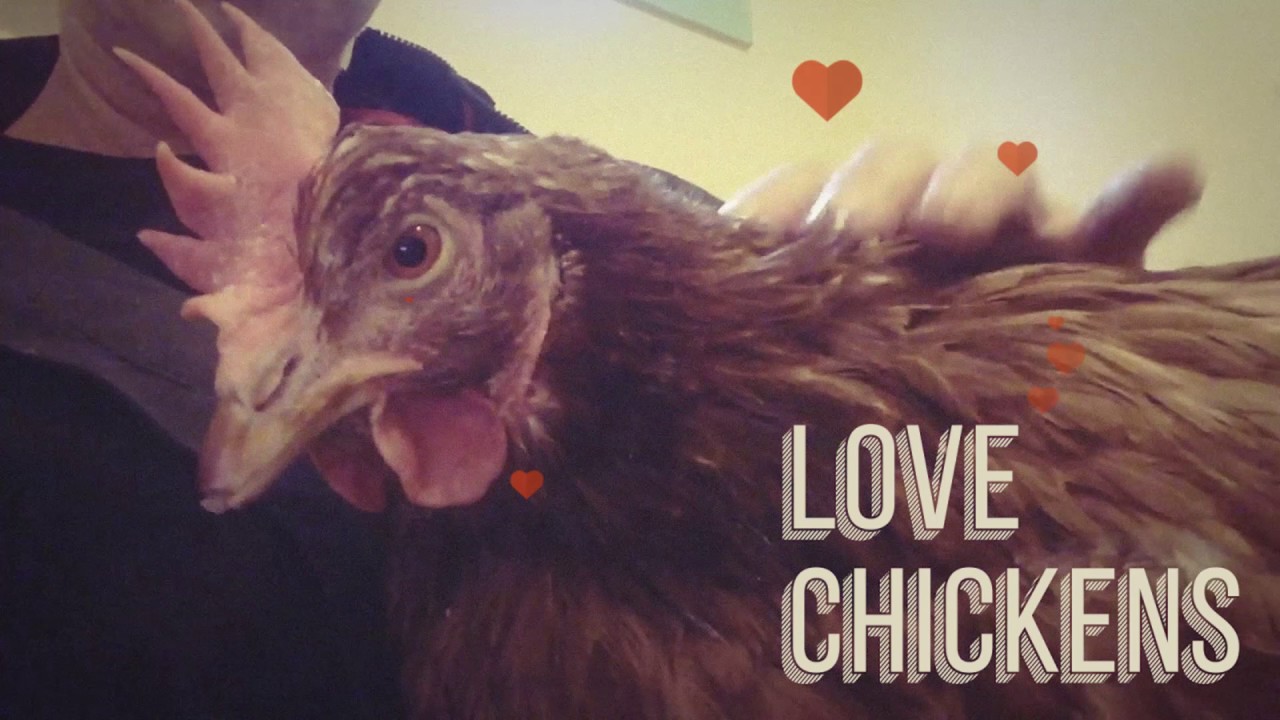 Chickens Purr
Click to play. The video then loads from YouTube in privacy-enhanced mode (youtube-nocookie.com) and data such as your IP address is transferred to Google. Privacy policy
4. Chickens love to play and explore
Given the chance, chickens spend much of their day exploring and engaging with the world around them.
They enjoy scratching through leaves and soil searching for seeds, insects and interesting objects. They dustbathe to keep their feathers healthy and investigate unfamiliar surroundings with curiosity.13
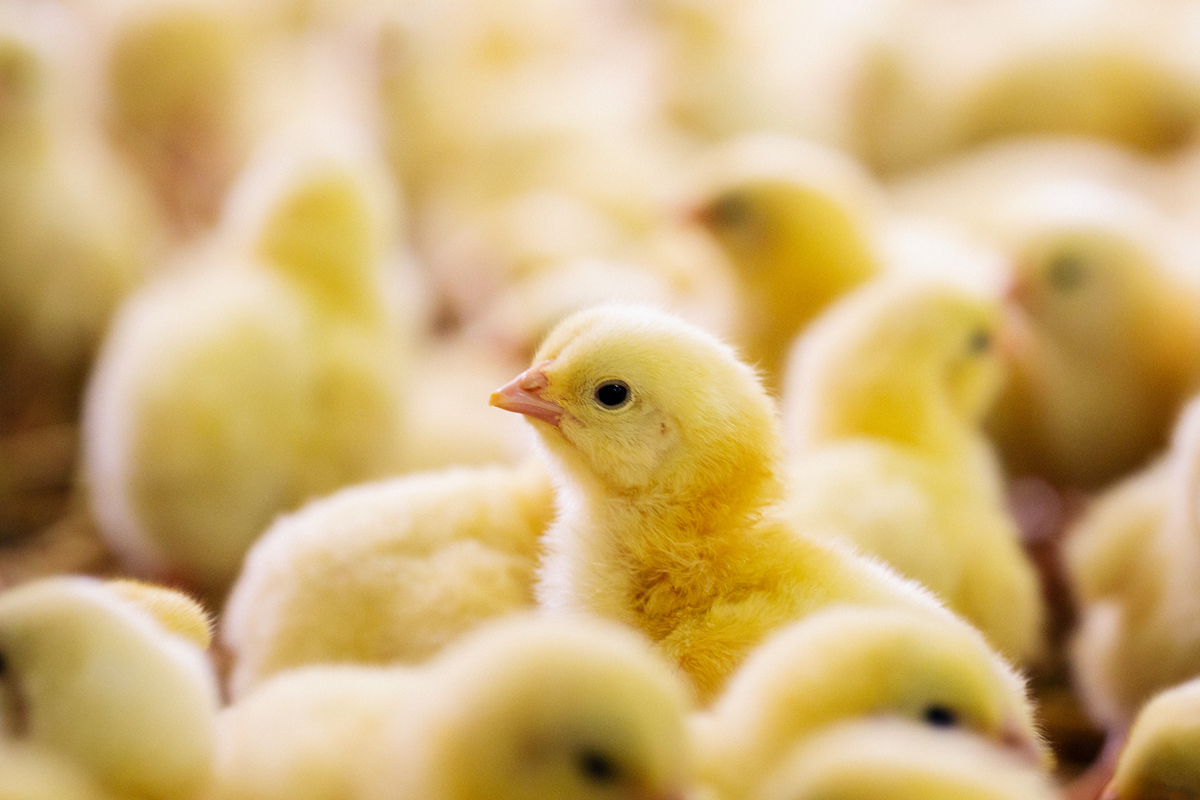
Young chicks have also been observed playing – running, jumping and engaging in playful interactions with each other when they feel relaxed and secure.14
These behaviours matter because they show that chickens are individuals with instincts and desires that are important to them.
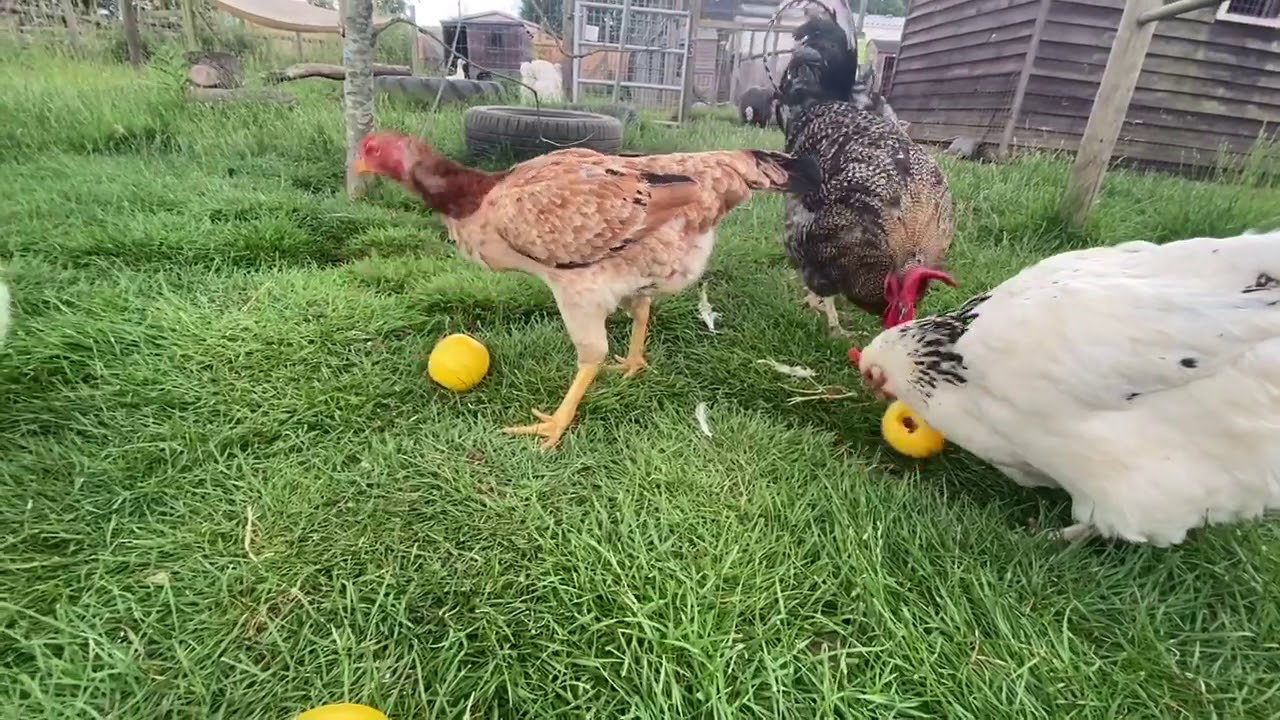 Chickens Enjoy Treat Balls- Hopefield Animal Sanctuary
Click to play. The video then loads from YouTube in privacy-enhanced mode (youtube-nocookie.com) and data such as your IP address is transferred to Google. Privacy policy
5. Chickens dream when they sleep
Like humans and many other animals, chickens experience REM (rapid eye movement) sleep, the stage of sleep associated with dreaming.
Scientists studying sleeping birds have found that chickens cycle through different stages, including deep sleep and REM sleep.15
The idea that chickens dream reveals a hidden depth to their inner world. What do they dream about? Perhaps it’s foraging with friends, exploring or spending time in their flock. In natural environments, chickens also choose safe, elevated places to sleep at night, often resting closely beside companions they trust.
Dreaming is just one more sign of chickens’ cognitive and emotional complexity, reminding us that they are sentient beings with minds of their own.
The reality for most chickens
Despite their intelligence and emotional capacity, chickens live in conditions that bear little resemblance to an idyllic life.
Modern chickens reared for meat have been genetically selected to grow unnaturally fast, often reaching slaughter weight in just six weeks. Their bodies grow so rapidly that many suffer painful leg problems and struggle to support their own weight.16
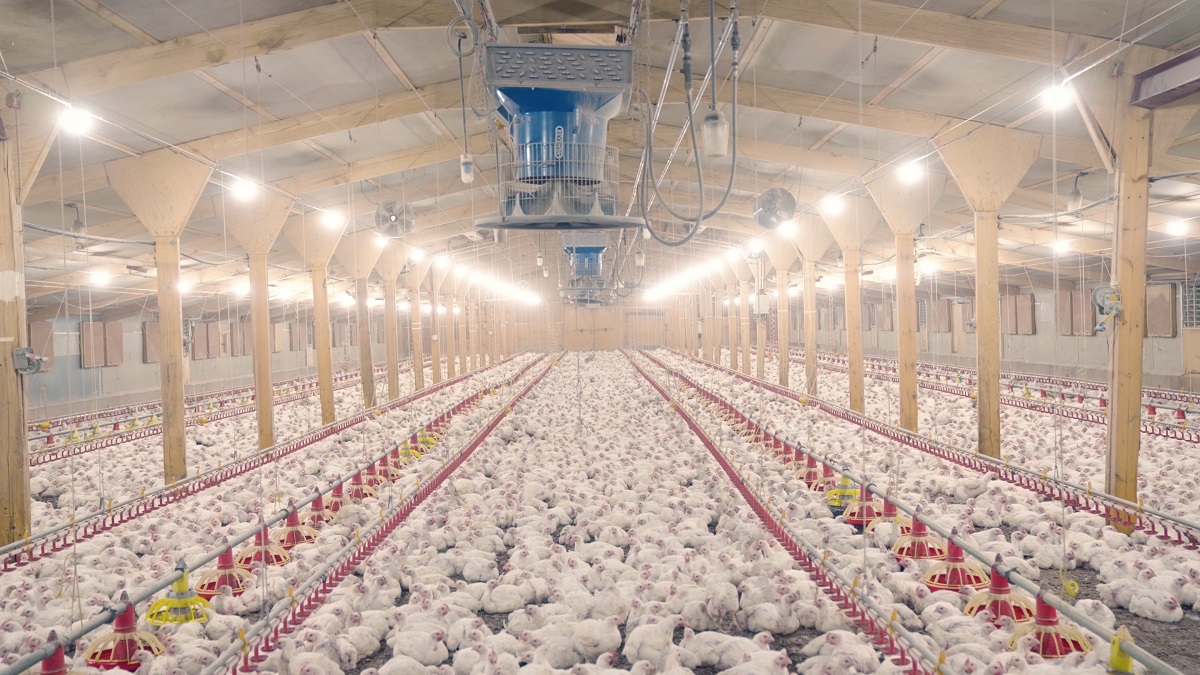
Most spend their lives in overcrowded sheds with tens of thousands of other birds, unable to roam, perch, forage or escape stress.
Hens farmed for their eggs fare little better. Most live only 18 months, confined in spaces no larger than a sheet of A4 paper. Male chicks, considered useless to the egg and meat industries, are killed on the day they hatch.
Chickens are among the most misunderstood animals on the planet precisely because their individuality is hidden from us. Every chicken is someone, not something. And for many people, learning these facts about chickens is the first step towards choosing a kinder future.
Ready to make a difference for chickens and other animals? Take part in Veganuary and try vegan for 31 days. You’ll receive free recipes, nutrition tips and support.
References:
1. Marino, L. (2017) ‘Thinking chickens: A review of cognition, emotion, and behavior in the domestic chicken’, Animal Cognition, 20(2), pp. 127–147. Available here.
2. Smith, C.L. and Zielinski, S.L. (2017) ‘The startling intelligence of the common chicken’, Scientific American. Available here.
3. Roser, M. (2019) ‘How many animals are slaughtered each day?’, Our World in Data. Available here.
4. Department for Environment, Food & Rural Affairs (DEFRA) (2023) ‘Agriculture in the United Kingdom 2022: Chapter 8 Livestock’, GOV.UK. Available here.
5. Smith, K-L. and Johnson, A.J. (2012) ‘The Chicken Challenge – What Contemporary Studies Of Fowl Mean For Science And Ethics’, Between the Species, 15(1), pp. 75–102. Available here.
6. Ibid.
7. Edgar, J.L., Held, S., Jones, C. and Troisi, C. (2016) ‘Influences of maternal care on chicken welfare’, Animals, 6(1), p. 2. Available here.
8. Edgar, J.L., Lowe, J.C., Paul, E.S. and Nicol, C.J. (2011) ‘Avian maternal response to chick distress’, Proceedings of the Royal Society B: Biological Sciences, 278(1721), pp. 3129–3134. Available here.
9. Marino, L. (2017) ‘Thinking chickens: A review of cognition, emotion, and behavior in the domestic chicken’, Animal Cognition, 20(2), pp. 127–147. Available here.
10. Rugani, R., Fontanari, L., Simoni, E., Regolin, L. and Vallortigara, G. (2009) ‘Arithmetic in newborn chicks’, Proceedings of the Royal Society B: Biological Sciences, 276(1666), pp. 2451–2460. Available here.
11. Lay, D.C., Fulton, R.M., Hester, P.Y., Karcher, D.M., Kjaer, J.B., Mench, J.A., Mullens, B.A., Newberry, R.C., Nicol, C.J., O’Sullivan, N.P. and Porter, R.E. (2011) ‘Hen welfare in different housing systems’, Poultry Science, 90(1), pp. 278–294. Available here.
12. Jones, R.B. (1996) ‘Fear and adaptability in poultry: insights, implications and imperatives’, World’s Poultry Science Journal, 52(2), pp. 131–174. Available here.
13. British Hen Welfare Trust (n.d.) ‘Chicken Boredom Busters’. Available here.
14. Frontiers Science News (2024) ‘Why do male chicks play more than females? Study finds answers in distant relatives’. Available here.
15. Rattenborg, N.C., van der Meij, J., Beckers, G.J.L. and Lesku, J.A. (2019). Local Aspects of Avian Non-REM and REM Sleep. Frontiers in Neuroscience, 13. Available here.
16. Knowles, T.G., Kestin, S.C., Haslam, S.M., Brown, S.N., Green, L.E., Butterworth, A., Pope, S.J., Pfeiffer, D. and Nicol, C.J. (2008) ‘Leg disorders in broiler chickens: Prevalence, risk factors and prevention’, PLoS ONE, 3(2), e1545. Available here.